Understand what the structure changes
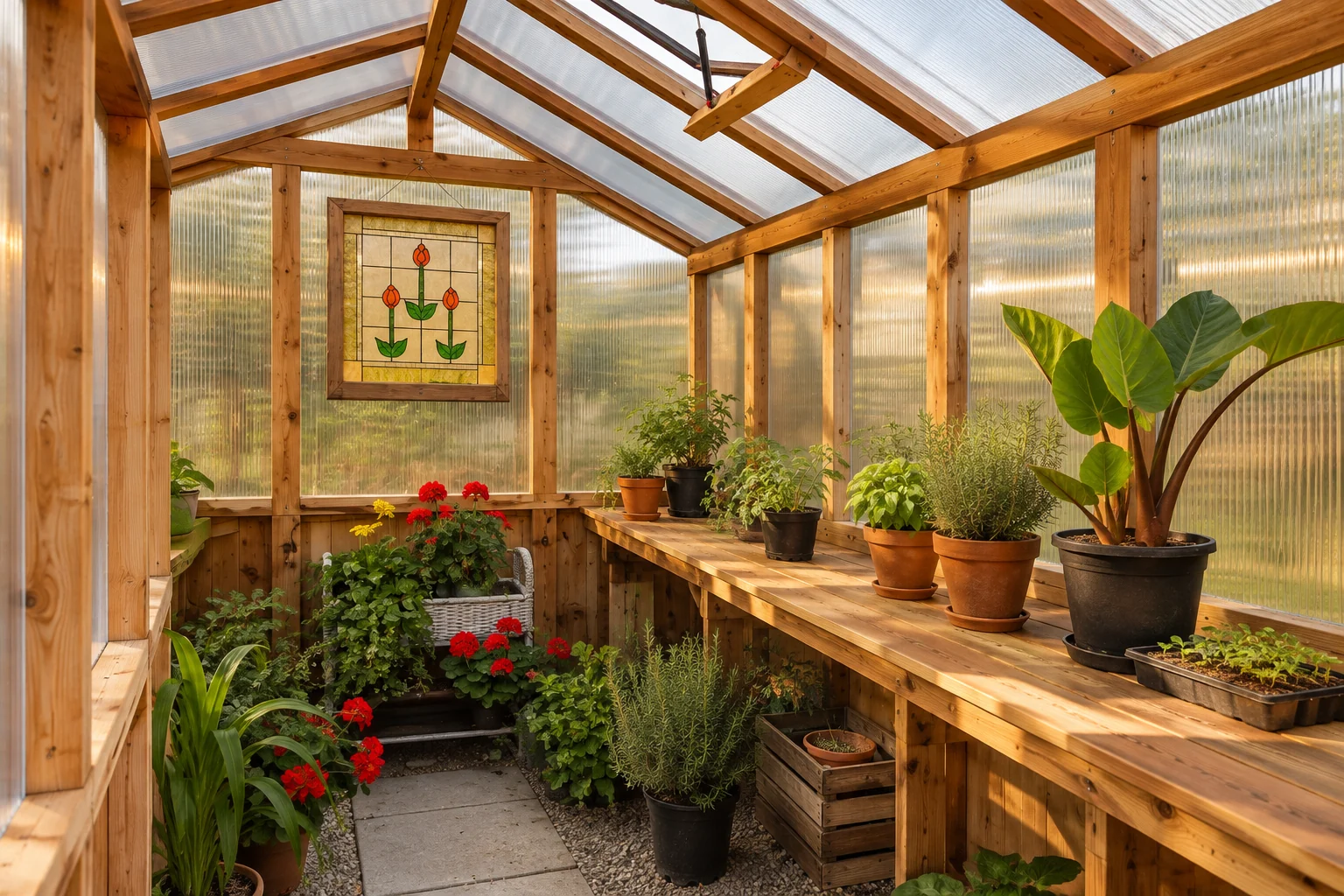
A greenhouse captures solar warmth but can approach outdoor temperatures at night. Even on cold days, sunshine can make the interior too hot. Closing it for the evening and ventilating it during the day are both part of using it. [1]
In Cincinnati, focus first on extending cool crops into spring and autumn. Growing through winter takes closer management and can still involve losses. [5]
Choose crops for the coldest part of the day
| Crop group | A practical use | Main limit |
|---|---|---|
| Spinach, kale, hardy Asian greens | Cool-season beds and carefully managed winter trials | Growth slows with cold and low light; hardiness varies. [2] |
| Lettuce and arugula | Spring and autumn salads | Do not assume the same winter tolerance as spinach. [2] |
| Tomatoes, peppers, cucumbers | Warm-season production after suitable temperatures arrive | An unheated house does not provide reliable winter protection or early seed-starting warmth. [1] |
Choose varieties described for the intended season and begin with a small trial. Record what survives and what grows well; those are different outcomes. [2]
A seasonal plan for a Cincinnati greenhouse
Use the sequence below as a planning framework. The actual switch between crops depends on measured temperatures, the forecast, and the particular structure.
| Season | Focus |
|---|---|
| Late winter and early spring | Monitor existing hardy crops and begin cool-season trials as conditions permit. Keep protection available. [5] |
| Late spring | Introduce tender crops only when their temperature needs can be met overnight. Follow the outdoor frost outlook too. [1] |
| Summer | Prioritize ventilation and prevent excessive daytime heat. Leave room to reach plants and open vents. [1] |
| Late summer and early autumn | Establish hardy greens early enough to build leaves before short days restrict growth. [6] |
| Late autumn and winter | Protect established crops as needed and expect slower replacement growth after harvest. Harvest greens after they thaw. [2] [3] |
Winter light and root conditions set limits
Winter crops need a head start. Short days and cloudy weather reduce growth, so late sowing may leave very little to harvest. Even adding warmth cannot fully replace missing light. Autumn-grown leaves can become the crop you harvest gradually through colder weather, with results depending on species and conditions. [2] [6]
Ground-connected soil buffers temperature better than small pots on a bench. Raised beds and containers can still freeze, so results from a large tunnel will not transfer directly to a small house. [1]
Build a routine around air, water, and covers
- Measure: record overnight lows and daytime highs at crop level, then adjust the planting plan to the readings.
- Ventilate: release excess heat on sunny days and maintain space for air to move through plants.
- Water thoughtfully: check moisture before watering and do it early enough for wet foliage to dry before evening. Avoid leaving puddles or repeatedly soaking a slow-growing crop. [4]
- Use inner covers carefully: row cover can add protection inside the house, but it reduces light and does not ventilate itself. Manage or remove it as daytime conditions require. [3]
Inspect plants while doing these jobs. Condensation and crowded, damp foliage are reasons to review airflow and watering. [4]
Choose the greenhouse around your intended use
Before settling on a design, map winter shade and think through access, bed position, and how you will tend the space during cold weather. Sunlight and the ability to manage extra protection are central to winter use. [5]
Write down the first job you want the house to do: hold autumn greens, support spring cool crops, or house summer plants. Then plan one manageable season around that job before expanding. The useful measure is whether the structure supports the crops and routine you want, with its seasonal limits understood.
Sources
- Very Small Greenhouses for Back YardsUniversity of New Hampshire Extension
- Greenhouse Greens ResourcesUniversity of Massachusetts Amherst Extension
- Frost Management in VegetablesIowa State University Extension and Outreach
- Reducing Humidity in the GreenhouseUniversity of Massachusetts Amherst Extension
- Greenhouse placement and growing without heatUniversity of Maine Cooperative Extension
- Transitioning your high tunnel for fall and winterUniversity of Minnesota Extension